

Henry's Law: What Regina Property Managers Need to Know Before November 1
If you manage a multi-unit residential building in Saskatchewan, there's a new deadline you need on your radar. Starting November 1, 2026, every residential suite in every multi-unit building in the province needs its own carbon monoxide alarm. It doesn't matter how old the building is, whether it's been renovated, or whether the suite has a furnace or gas appliance in it. Every suite needs one.
This is called Henry's Law, named after Henry Losco, an 11-year-old boy who died of carbon monoxide poisoning in a Regina apartment building in December 2025. The province introduced the amendment this past May, and Rental Housing Saskatchewan has been on board with the change from the start. It's a real deadline with a real reason behind it, and it applies to buildings that already thought they were compliant.
How this is different from the old rule
Saskatchewan has required CO alarms in residential buildings since 2022, but that rule only applied where there was a fuel-burning appliance in the suite, or where the suite shared a wall, floor, or ceiling with an attached parking garage. A lot of apartment and condo suites didn't fall into either category and never needed one.
Henry's Law removes that condition entirely. If it's a residential suite in a multi-unit building, it needs a CO alarm. That includes:
Apartments
Condominiums
Motels and hotels
Boarding and rooming houses
Dormitories
Any other building with multiple residential suites
Each suite needs at least one CO alarm, and it needs to be installed, maintained, tested, and replaced on schedule, same as your smoke alarms.
Why this catches a lot of buildings off guard
If your building was compliant under the old rule because only the units with garages or gas appliances had alarms, you're not automatically compliant under the new one. Every suite counts now, including the ones that never needed a device before. Older buildings especially, since the alarm requirement didn't exist at all before 2022, and until now a lot of interior suites had no reason to have one.
This is exactly the kind of gap that doesn't show up until someone's doing a walkthrough or an insurer asks for proof of compliance, and by then you're scrambling against a deadline instead of planning around it.
What to do before November 1
Get a suite-by-suite inventory of what's currently installed. Most buildings already have hardwired, interconnected smoke alarms, often in bedrooms as well as common areas. Check what's already there before assuming you need net-new wiring.
In most cases this isn't a new install, it's a swap. If the suite already has a hardwired interconnected smoke alarm, that same box can usually be swapped for a combination smoke and CO alarm rated for the same interconnect system. Far less invasive than running new wire, and far faster to get a whole building done.
Combination smoke and CO alarms let you meet both requirements with one device per location instead of running two separate systems.
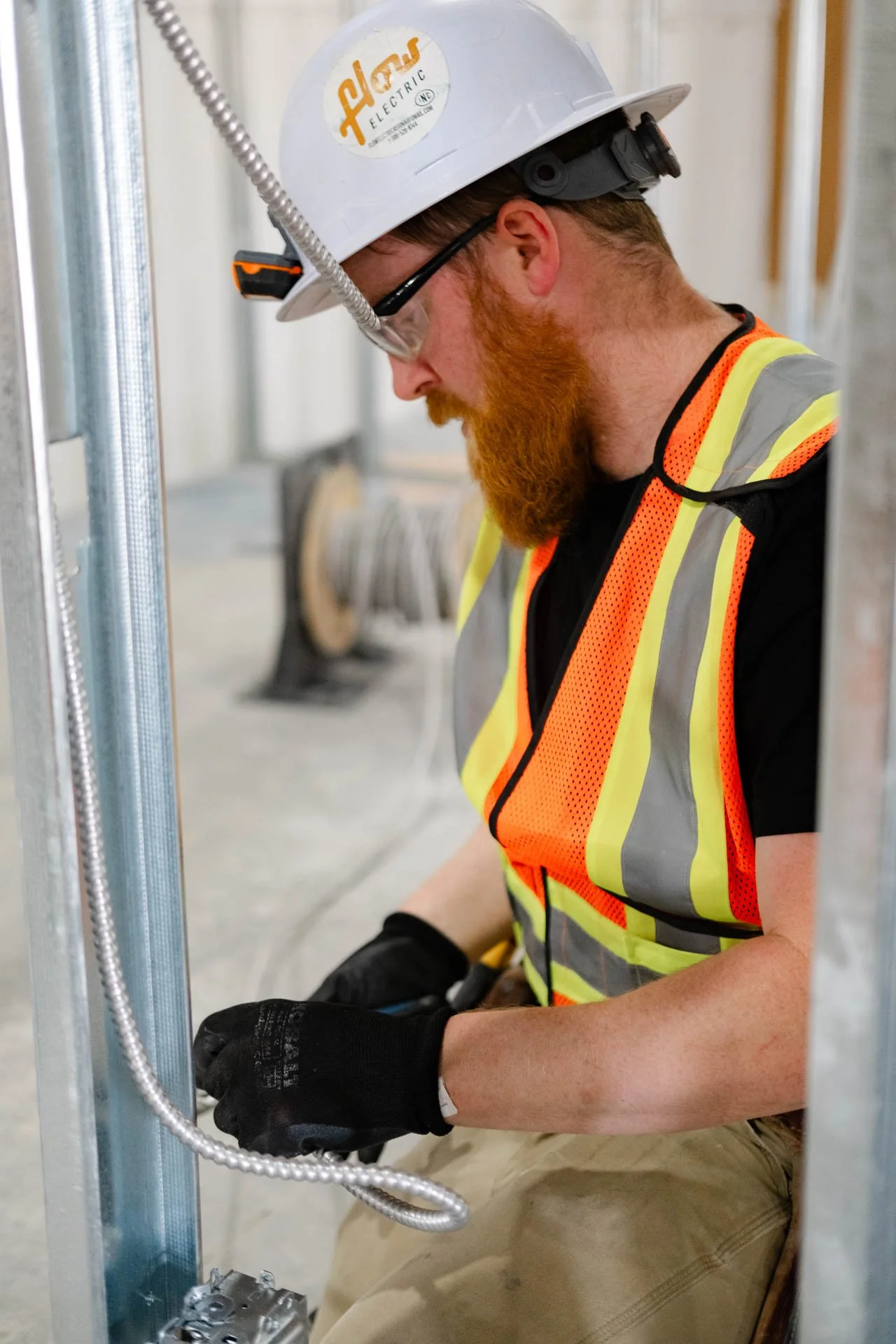
Anywhere there isn't an existing hardwired unit to swap, or the interconnect system is old enough that compatible combo units aren't available for it, that's where new wiring comes in, and that's licensed electrician work.
The units we install run on 10 year lithium batteries, and we label each one with the install date and expiry date right on the device. No more guessing when it was put in or when it needs replacing, and no more relying on someone to remember to swap a 9 volt.
For buildings that want it, we'll build a spreadsheet tracking every unit and its expiry date. Your annual fire alarm company can reference it and check units off as they go through their yearly inspection, so it's one less thing your board has to manage on its own.
Build this into your building's maintenance log so testing and replacement dates are tracked going forward, not just installed and forgotten.
We can help you get ahead of this
We're already doing this work in several buildings across Regina, going suite to suite, checking what's hardwired, and swapping over to combo units where the existing interconnect system supports it. That approach keeps costs down and gets a whole building compliant fast, without tearing into walls that don't need it. Every unit we install is labeled with its install and expiry date, and if your board wants it, we'll hand over a spreadsheet tracking every device in the building so your annual fire alarm company can check them off during their yearly visit.
If you manage a building and aren't sure where you stand against the November 1 deadline, we can walk it, tell you exactly what can be swapped versus what needs new wiring, and quote the whole job.
Call us at 1-306-910-1469 to get your building ahead of the deadline instead of behind it.
